Our Story

Fo guang shan

Fo Guang Shan Buddhist Temple New Zealand

Auckland Temple

Flat Bush, Auckland

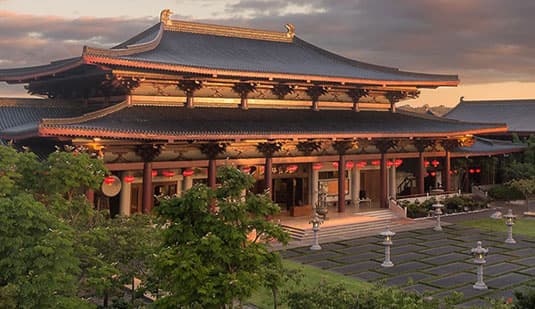
Auckland is known as the “City of Sails”, and Fo Guang Shan North Island sits in this stunning international city on four hectares of ground.

The temple and community centre, in the Flat Bush suburb of Auckland, is the largest Buddhist temple in the country. It was built over seven years at a cost of NZ$20 million, designed in the architectural style of the Tang Dynasty, and includes a large Buddha statue and a two-tonne bell.

Opened in late 2007, its mission is to promote Humanistic Buddhism — and it is open to non-Buddhists too, through education and teaching people how to lead good lives. Even before its official opening the temple ran community courses in Chinese calligraphy, Chinese language, yoga and martial arts, and provided a venue for crime prevention talks and meetings.
Fo Guang Shan Buddhist Temple Christchurch

Christchurch Temple

Riccarton, Christchurch

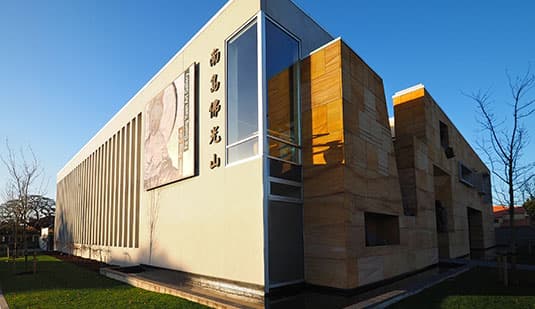
Fo Guang Shan South Island takes its design from the Buddha and bodhisattva carvings of the Longmen Grottoes, bringing the art of the stone cave into a Western building so that East and West meet in Christchurch. The grotto-like outer wall and the contemporary bronzes of the Four Great Bodhisattvas are the design’s signature gestures, expressing the Buddhist idea that practice is carried in walking, standing, sitting and lying down.

The temple occupies 2,000 square metres at the corner of Harakeke Street and Riccarton Road. It was designed jointly by Warren & Mahoney of New Zealand and BanmuTang Environmental Integration of Taiwan, and built by Fletcher Construction. The foundation stone was laid on 30 July 2005; construction began in February 2006 and was completed that December, ten months later. Venerable Master Hsing Yun came in person to preside over the consecration on 3 October 2007.

In April 2007 the building placed fifth in the national NZIA Supreme New Zealand Award, and on 7 November that year the Christchurch Civic Trust gave it a 2007 award for environmentally sustainable building. Rough stone and plain walls speak of the practitioner’s thinking; unworked timber and still water mirror the practitioner’s mind — the closer a material stays to its own nature, the closer the building comes to the spirit.

Humanistic Buddhism

  • What is Buddhism?

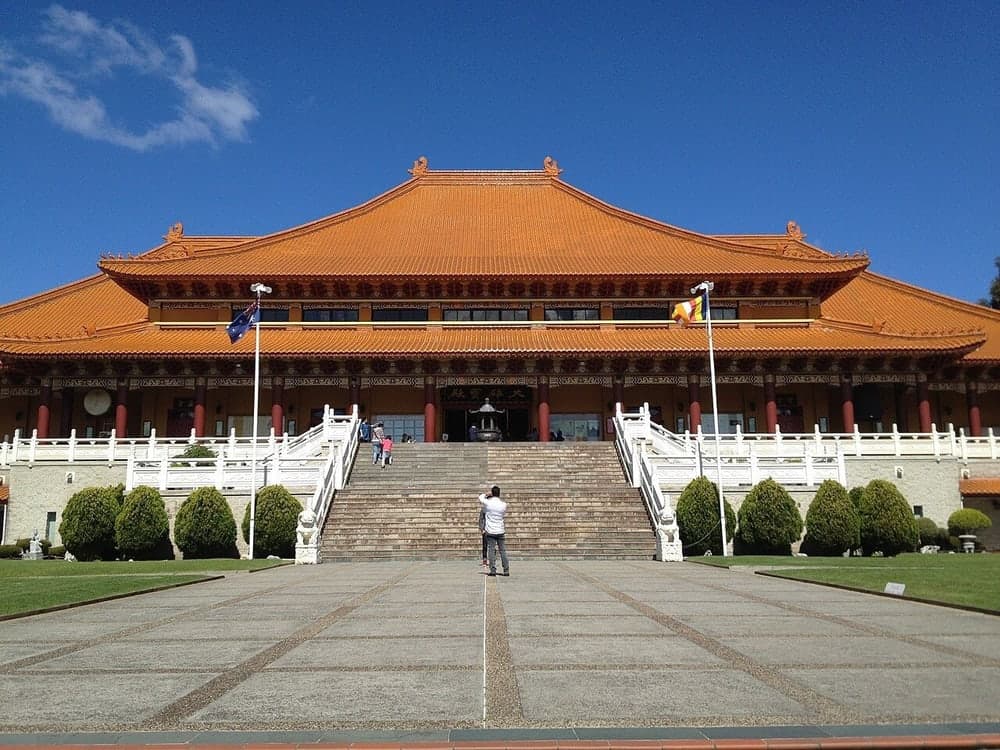
    The main hall of Nan Tien Temple in Wollongong, Australia, above its front steps

    Buddhism is a way of living that comes from the teachings of the Buddha. It is a religion of wisdom, valuing awakening and understanding over unquestioning belief. Humanistic Buddhism holds that the Dharma belongs in the world — practice is carried out in how we treat the people in front of us.

  • Who was the Buddha?

    Who was the Buddha?

    About two and a half thousand years ago the Buddha was born in Kapilavastu in northern India, the son of King Suddhodana of the Shakya clan, and named Siddhartha Gautama. He gave up his claim to the throne to live as a monastic, awakened beneath the Bodhi tree, and spent the following forty-nine years teaching.

  • What did the Buddha teach?

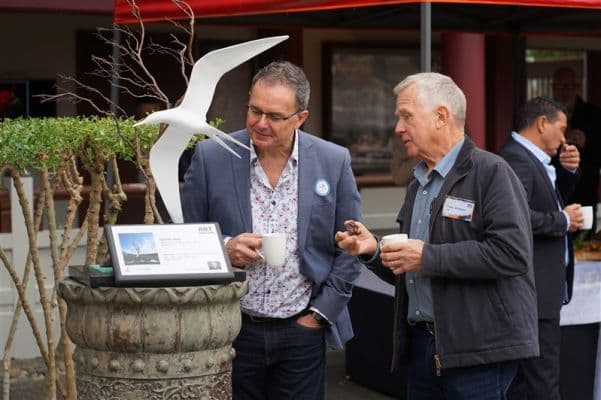
    2026 Art Salon Opening

    The Buddha found that neither indulgence nor extreme austerity leads to peace and contentment — the middle way does. The Four Noble Truths and the Eightfold Path are the heart of it, guiding people to recognise suffering, put down attachment, and move towards liberation.

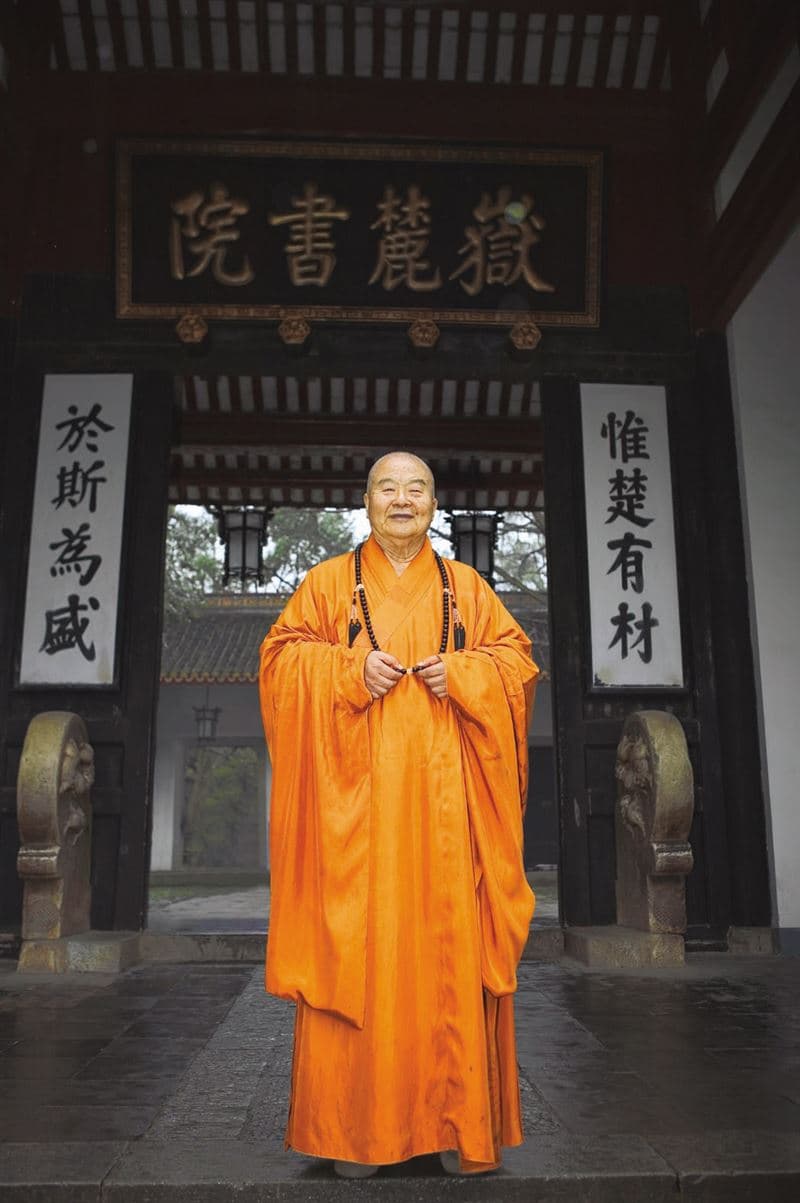
Venerable Master Hsing Yun

A practising religious revolutionary who is decisive; a compassionate creator who has successfully disseminated Buddhist theories; an educator who is loving and promotes knowledge.

Venerable Master Hsing Yun, the founder of Fo Guang Shan Monastery, was born in Jiangsu province in China in 1927. Tonsured under Venerable Master Chih Kai at the age of twelve, he received his formal monastic training at the Jin-shan, Chiao-shan and Chi-hsia Vinaya Colleges. In 1952 he established the Buddha Recitation group in Ilan and reinforced the foundation of Dharma propagation in Taiwan.

In 1967 he founded Fo Guang Shan Monastery and, on the principles of Humanistic Buddhism, steered Buddhism towards education, culture, charity and religious practice — realising his ideal of “Buddha’s light shining across the three thousand realms, Dharma water flowing through the five continents”.

Over fifty years of Dharma propagation he has been internationally recognised, receiving honorary doctorates from universities around the world, and is known as the first person to put Humanistic Buddhism into practice. His work has dedicated a life to benefiting society through having a good heart, doing good deeds and saying good words.

“Building temples to house the monastics brings countless people to the path; spreading the Dharma to benefit all keeps the road to awakening open for ages.” Venerable Master Hsing Yun wrote this of the temples he founded around the world. Today more than two hundred Fo Guang Shan temples stand across many countries — reaching past the boundaries of nation, race and gender, and bringing culture, education, charity and Dharma propagation together under one roof as the practice of Humanistic Buddhism.

Fo Guang Shan around the world

Taiwan · 74

Asia · 45

North America · 31

South America · 9

Europe · 14

Oceania · 12

Africa · 7