Art Gallery

Since 2017, Fo Guang Yuan Art Gallery Auckland has held an annual exhibition showcasing artworks by artists from all over New Zealand. The gallery’s curator, Venerable Abbess Manshin, proposed a cultural and art exchange gathering for New Zealand artists at the Auckland temple, emphasising that Fo Guang Yuan Art Gallery is a platform for local artists to show their creativeness and talent to the public.

She hopes more artists will visit the temple, feel inspired, and express their experiences and feelings through art — bringing people together and contributing to a better society. That is how the Art Salon began.

The Cherry Blossom Art Salon aims to foster harmonious relationships and positivity with local artists in Aotearoa New Zealand through art. The temple provides a beautiful location, and complimentary curation, for local artists to showcase and sell their creations.

Cherry Blossom Art Salon, year by year

  • 2020 — the fourth salon

    Badge-04

    24 October to 29 November 2020, at Fo Guang Shan Buddhist Temple Auckland. 92 local artists exhibited over 400 works: wood and copper sculpture, sketches, glass, jewellery, ceramics, oil painting, mixed media, photography, mosaic, batik, cross stitch, weaving and ikebana.

  • 2019 — the third salon

    Badge-03

    2 November to 1 December 2019, at Fo Guang Yuan Art Gallery Auckland. 92 local artists exhibited over 500 works. The finale was held in the Main Shrine on 23 November, with more than three hundred people attending.

  • 2018 — the second salon

    Badge-02

    10 November to 9 December 2018, at Fo Guang Shan Buddhist Temple Auckland. 90 local artists exhibited over 300 works. A ribbon-cutting ceremony was held on Saturday 24 November alongside the Cherry Blossom Festival.

  • 2017 — the inaugural salon

    Badge-01

    25 November to 10 December 2017, at Fo Guang Shan Buddhist Temple Auckland. 32 local artists exhibited 154 works. The opening was attended by Members of Parliament, local board members, community representatives, Friends of the Art Gallery, and 23 of the artists with their families.

Where to find the gallery

Fo Guang Shan Buddhist Temple New Zealand

Auckland Temple

Flat Bush, Auckland

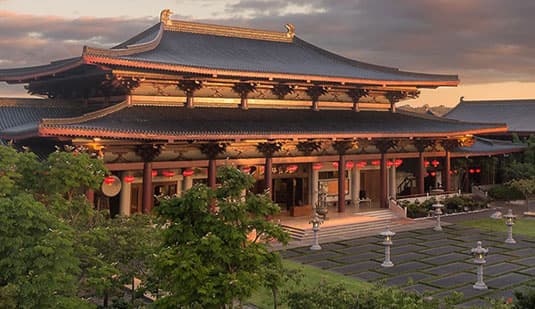
Auckland is known as the “City of Sails”, and Fo Guang Shan North Island sits in this stunning international city on four hectares of ground.

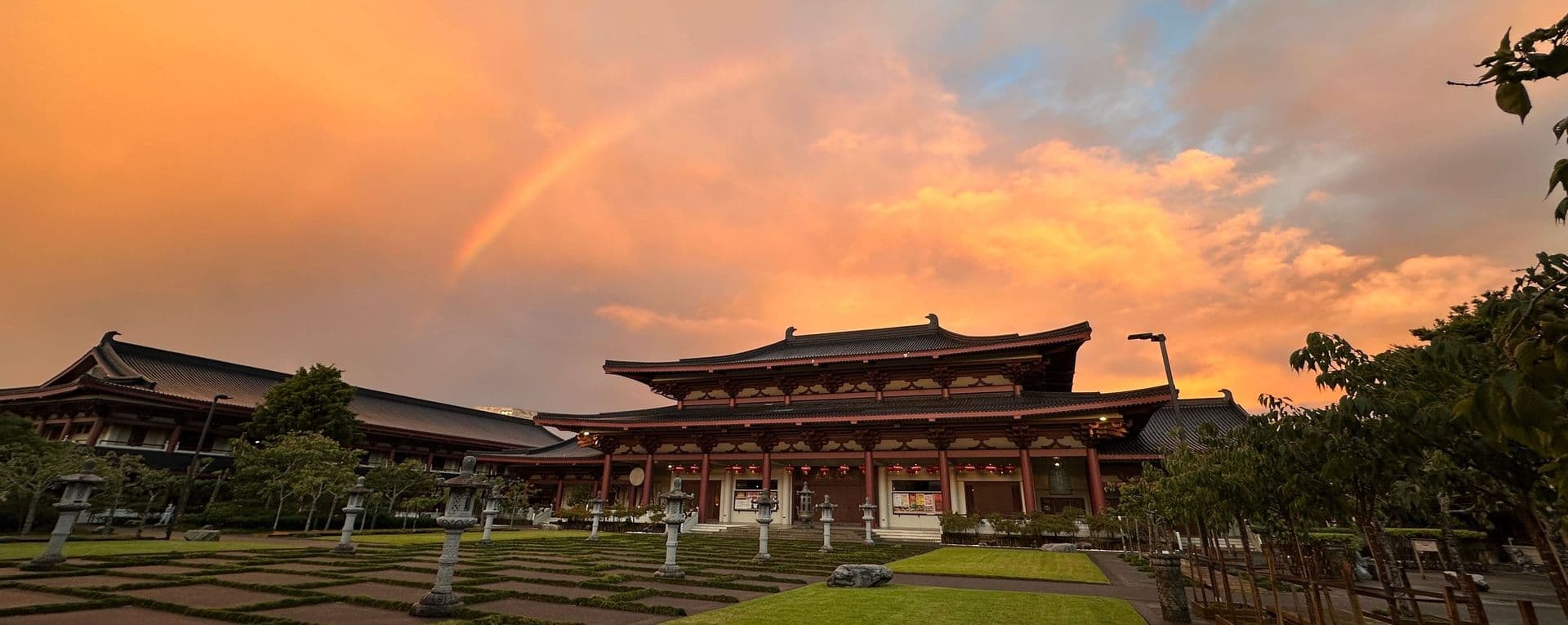
The temple and community centre, in the Flat Bush suburb of Auckland, is the largest Buddhist temple in the country. It was built over seven years at a cost of NZ$20 million, designed in the architectural style of the Tang Dynasty, and includes a large Buddha statue and a two-tonne bell.

Opened in late 2007, its mission is to promote Humanistic Buddhism — and it is open to non-Buddhists too, through education and teaching people how to lead good lives. Even before its official opening the temple ran community courses in Chinese calligraphy, Chinese language, yoga and martial arts, and provided a venue for crime prevention talks and meetings.
Fo Guang Shan Buddhist Temple Christchurch

Christchurch Temple

Riccarton, Christchurch

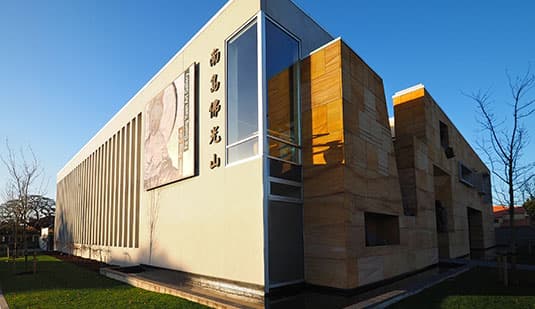
Fo Guang Shan South Island takes its design from the Buddha and bodhisattva carvings of the Longmen Grottoes, bringing the art of the stone cave into a Western building so that East and West meet in Christchurch. The grotto-like outer wall and the contemporary bronzes of the Four Great Bodhisattvas are the design’s signature gestures, expressing the Buddhist idea that practice is carried in walking, standing, sitting and lying down.

The temple occupies 2,000 square metres at the corner of Harakeke Street and Riccarton Road. It was designed jointly by Warren & Mahoney of New Zealand and BanmuTang Environmental Integration of Taiwan, and built by Fletcher Construction. The foundation stone was laid on 30 July 2005; construction began in February 2006 and was completed that December, ten months later. Venerable Master Hsing Yun came in person to preside over the consecration on 3 October 2007.

In April 2007 the building placed fifth in the national NZIA Supreme New Zealand Award, and on 7 November that year the Christchurch Civic Trust gave it a 2007 award for environmentally sustainable building. Rough stone and plain walls speak of the practitioner’s thinking; unworked timber and still water mirror the practitioner’s mind — the closer a material stays to its own nature, the closer the building comes to the spirit.